Phone: +86 18966915318
E-mail: sales05@nutritionoem.com
Add: Room 815, Unit 1, Building 1, Zhongjian Caizhi Plaza, Mingguang Road, Yuanding Road, Economic And Technological Development Zone, Xi'an, Shaanxi, China
Why Choose Liposomal Vitamin C?
The "Absorption Bottleneck" of Traditional Vitamin C
Vitamin C is a water-soluble nutrient. When supplemented through regular tablets, its absorption in the small intestine is highly dependent on the water-soluble sodium-dependent vitamin C transporter (SVCT1).
Transporter Saturation: When a single intake of regular vitamin C exceeds 1000mg, the small intestinal transporter becomes saturated, and the actual absorption rate drops below 50%.
Gastrointestinal Side Effects: High concentrations of unabsorbed vitamin C remain in the intestines, where they have an osmotic effect, easily causing diarrhea, bloating, or stomach upset.
What is liposome technology?
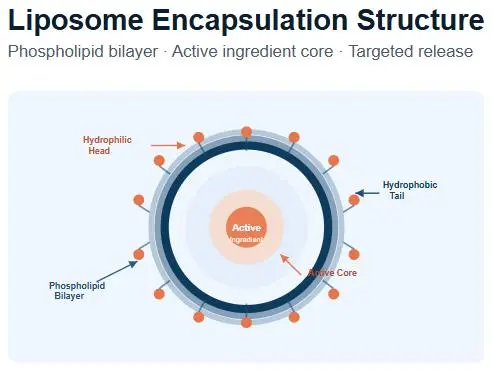
Liposomes are microscopic spherical vesicles composed of a phospholipid bilayer, whose structure is highly similar to that of human cell membranes.
Protecting the "passenger": Water-soluble vitamin C is encapsulated within the vesicle core, protecting it from premature destruction by stomach acid and digestive enzymes. Fusion absorption: Because the phospholipid shell is structurally similar to the small intestinal epithelial cell membrane, it can directly penetrate into the bloodstream via cell fusion or the lymphatic system, eliminating the need for a dedicated "transporter".
Four Core Advantages of Liposome Vitamin C:
1. Significantly Improved Bioavailability: Clinical comparative studies (such as data published in the *European Journal of Nutrition* in 2024) show that, at the same dosage, liposome-encapsulated vitamin C has significantly higher peak concentrations in human blood and higher leukocyte uptake rates than ordinary ascorbic acid.
2. Extended Circulation Time: Ordinary vitamin C is easily metabolized and excreted by the kidneys after entering the bloodstream. Liposome encapsulation provides better "invisibility," allowing vitamin C to remain in the bloodstream for a longer period, continuously providing energy to tissue cells.
3. Highly Gastrointestinal Friendly: Because the active ingredient is isolated by a phospholipid bilayer, vitamin C does not directly contact the gastric mucosa, and even high-dose supplementation will not cause gastrointestinal irritation or diarrhea.
4. Synergistic Support for Cell Membrane Health: High-quality liposome supplements typically use natural phosphatidylcholine (PC) as a raw material, providing essential phospholipids for human cell membrane and liver health while supplementing vitamin C.
Conventional Vitamin C vs Liposomal Vitamin C
| Dimension | Conventional Vitamin C (Tablet / Capsule) | Liposomal Vitamin C |
|---|---|---|
| Absorption Pathway | Relies on intestinal SVCT1 transporters | Cell‑membrane fusion plus lymphatic absorption |
| High‑Dose Absorption Rate | Low (below 50% above 1000 mg) | High (minimal limitation from transporters) |
| Gastrointestinal Tolerance | Prone to gastric irritation, diarrhoea and other discomforts | Gentle, non‑irritating |
| In‑vivo Retention Time | Short, fast metabolism | Longer, sustained release |
| Suitable Population | Daily basic supplementation | Users seeking high absorption; gut‑sensitive individuals; high‑stress populations |
4. How to Spot Premium Quality
When evaluating a supplier, do not rely on marketing claims alone. Ask these three questions to verify their expertise:
"Can you provide a particle size distribution report?" (If they cannot, they are likely selling a simple physical mixture.)
"What is your encapsulation efficiency rate?" (Anything below 80% is sub-optimal.)
"Do you provide third-party stability test data?" (Proof of shelf-life is essential for brand longevity.)
Conclusion:Liposomal Vitamin C is more than a trend; it is a scientifically validated advancement in nutritional delivery. By partnering with a manufacturer that prioritizes process precision, data transparency, and technical expertise, you can offer your customers a superior product that delivers on its promises.