Phone: +86 18966915318
E-mail: sales05@nutritionoem.com
Add: Room 815, Unit 1, Building 1, Zhongjian Caizhi Plaza, Mingguang Road, Yuanding Road, Economic And Technological Development Zone, Xi'an, Shaanxi, China
White Label vs. Private Label Supplements
Do you truly understand the difference between OEM, ODM, and private label?
In the health supplement supply chain, different cooperation models determine your control over product formulations and intellectual property:
OEM (Original Equipment Manufacturer): You provide mature formulations and R&D technology; the factory only handles contract manufacturing. Suitable for established brands with exclusive ingredients or laboratory support.
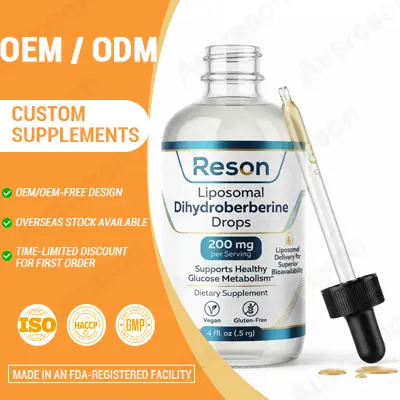
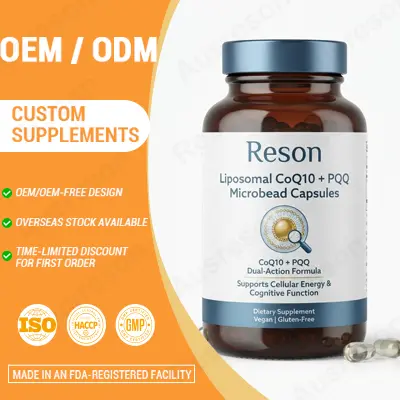
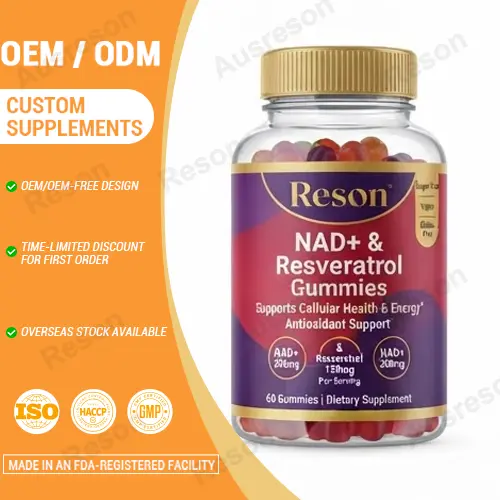
ODM (Original Design Manufacturer): The factory provides ready-made formulations, technology, and packaging designs. You select the appropriate design and directly print your trademark (commonly known in the industry as "private labeling").
Private Label: This is a business strategy concept. Whether the product is ODM-manufactured or manufactured in your own factory, as long as you own the asset rights, pricing power, and brand premium, it is your private label.
The "Lifeline" of SEO Content for Health Supplements: Health supplements fall under the strictly controlled YMYL (Your Money or Your Life) category in Google's search algorithm. If your website cannot demonstrate its expertise and trustworthiness, not only will your articles fail to rank, but your entire website may be penalized.
Regardless of your chosen business model, copywriting and brand building must achieve the following three points:
1. Supply Chain Transparency: If you are an ODM (Original Design Manufacturer), never claim on your website that you "own an independent laboratory" or have "developed independently for ten years" (this violates EEAT's integrity principles). You should emphasize "strategic partnerships with top-tier laboratories certified by GMP/NSF."
2. No Medical Claims: When writing product detail pages and blog posts, never use phrases like "cure," "prevent," or "alleviate" any disease (e.g., lower blood sugar, cure insomnia).
Incorrect Example: This product can effectively cure anxiety.
Compliance Demonstration: This product contains Ashwagandha, a component clinically proven to help support healthy cortisol levels and alleviate daily stress.
3. Provision of Third-Party Certificate of Analysis (COA) Reports: The COA (Certificate of Analysis) for each batch of products is prominently displayed on the website, proving that heavy metals and microorganisms are within acceptable limits and that purity meets standards. This is the strongest endorsement of trust for EEAT.
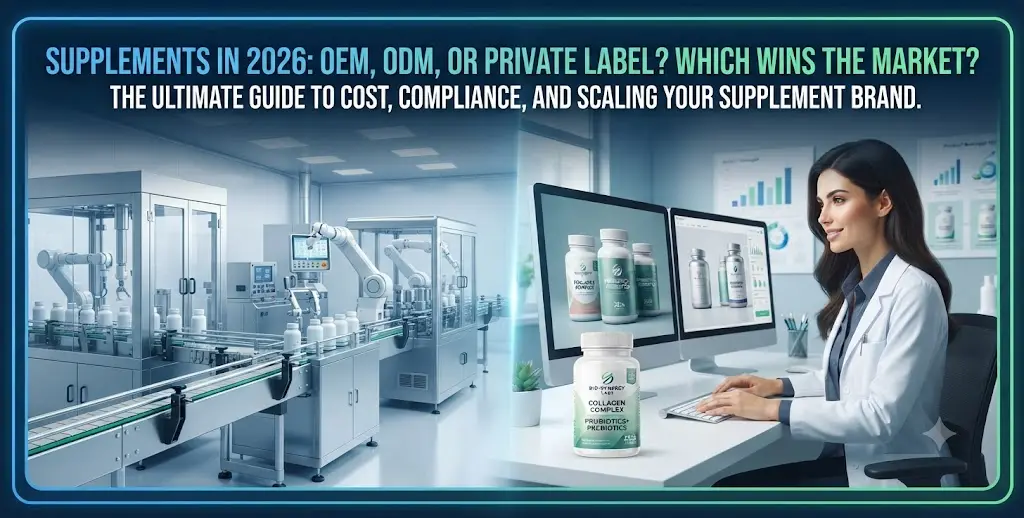
ODM Private Label vs. Independently Developed In-House BrandODM Private Label vs. Independently Developed In-House Brand
| Comparison Dimension | ODM Private Label Model | Independent R&D / Exclusive Brand Model (Self-developed OEM) |
|---|---|---|
| Upfront Capital Investment | Low(Typically $5,000 – $15,000) | High (R&D & stability testing require $20,000+) |
| Minimum Order Quantity (MOQ) | Low entry barrier(Usually 500 – 1,000 bottles minimum) | Strict MOQ (Typically 2,000 – 5,000 bottles minimum) |
| Time-to-Market | Extremely fast (Ready stock launch within 4–8 weeks) | Long lead time (12–16+ weeks for formula tuning & regulatory filing) |
| Formula Intellectual Property (IP) | No exclusive rights; competitors may access identical factory formulas | Fully exclusive proprietary formula. Builds high market barriers & higher brand valuation. |
| Long-Term Profit Margin | Profit margins vulnerable to fluctuations in factory wholesale prices | Unit production cost reduces by approx. 30% once mass-scaled |
Recommended Blue Ocean Categories Worth Entering:
Women's Health: Shifting from traditional multivitamins to customized capsules targeting menstrual balance, ovarian health, and menopausal management.
Gut & Weight Management: Driven by global focus on metabolic health, powders/capsules with satiety-regulating and probiotic + prebiotic combinations are surging at a CAGR of over 17%.
Clean Label & Formats: Traditional tablets are losing favor, while plant-based capsules dominate the customized market with a 44% market share, and consumers highly value the "clean label" of no preservatives.
Which model is the optimal solution for you?
If you are a large Amazon/Shopify cross-border seller, a social media influencer, or a startup team with limited funds: Choose the ODM (Original Design Manufacturer) model without hesitation. Utilize readily available compliant formulas in the supply chain and allocate your budget to targeted traffic and brand visuals.
If you are a medical chain with an established customer base, a technical team with patented ingredients, or a large, well-funded group: Choosing OEM customization or developing your own brand, and firmly grasping the core technology, is the key to building a long-term competitive advantage.